A zipper is a fastening device used on clothing, bags, jackets, shoes, luggage, and many other everyday products. Although it looks simple, a zipper contains several small parts that work together to open and close it smoothly.
Knowing the names of zipper parts can help you understand how zippers work, identify damaged components, choose replacement parts, and communicate with tailors or manufacturers.
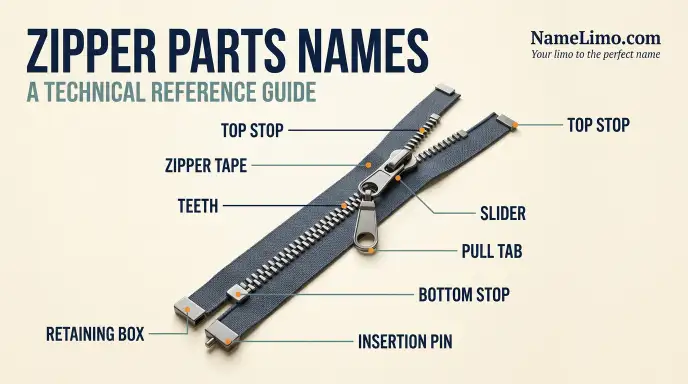
Common components include the slider, zipper teeth, pull tab, top stop, bottom stop, and zipper tape.
In this guide, you’ll learn the names of the main zipper parts, what each component does, and how different zipper types use these parts.
Main Parts of a Zipper
A standard zipper consists of several connected components. Each part has a specific function, from holding the zipper securely to allowing it to open and close.
1. Zipper Teeth
Zipper teeth are the small interlocking elements arranged along both sides of a zipper. When the slider moves, the teeth on one side engage with those on the other side to close the zipper.
Teeth may be made from metal, molded plastic, or continuous nylon coil.
2. Slider
The slider is the moving component that travels along the zipper and joins or separates the teeth. Its internal channels guide the teeth into the correct position.
A damaged or worn slider may cause the zipper to separate after closing.
3. Pull Tab
The pull tab is the small piece attached to the slider that you hold to move it. It may be made from metal, plastic, fabric, or leather.
Some pull tabs are decorative, while others are designed for easy gripping.
4. Zipper Tape
Zipper tape is the fabric strip attached to each side of the zipper. The teeth or coil are secured to the tape, which is then stitched into clothing, bags, or other products.
5. Top Stop
The top stop is a small component near the upper end of the zipper. It prevents the slider from traveling off the top of the zipper.
6. Bottom Stop
The bottom stop prevents the slider from moving beyond the lower end of a closed end zipper. Its design varies depending on the zipper construction.
7. Insertion Pin
An insertion pin is commonly found on separating zippers, such as those used on jackets. It enters the retaining box to connect the two sides before the slider closes the teeth.
8. Retaining Box
The retaining box receives the insertion pin on a separating zipper. It helps align and secure the two sides so the slider can close them correctly.
Zipper Parts Names and Their Functions
The following table summarizes the most common zipper components.
| Part name | Main function |
| Teeth | Interlock to close the zipper |
| Slider | Joins or separates the teeth |
| Pull tab | Provides a grip for moving the slider |
| Zipper tape | Holds the teeth or coil and attaches the zipper to the product |
| Top stop | Prevents the slider from leaving the top |
| Bottom stop | Limits slider movement at the bottom of a closed end zipper |
| Insertion pin | Enters the retaining box on a separating zipper |
| Retaining box | Receives the insertion pin |
| Reinforcement tape | Strengthens selected areas of some zipper constructions |
| Slider body | Houses the internal channels that guide the teeth |
Not every zipper contains every component. For example, a separating jacket zipper has an insertion pin and retaining box, while a typical closed end trouser zipper does not.
Parts of a Zipper Slider
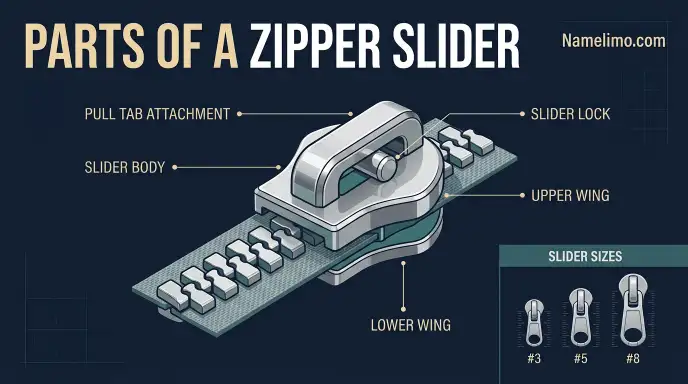
The slider is one of the most important zipper components. Its shape guides the teeth together when closing and apart when opening.
Slider Body
The slider body is the main structure through which the zipper teeth pass. It contains the channels that guide the teeth.
Upper and Lower Wings
Many sliders have upper and lower plates, often called wings. These help guide and support the teeth as they pass through the slider.
Pull Tab Attachment
The pull tab attaches to a loop, bridge, or other attachment feature on the slider. The exact design depends on the slider model.
Slider Lock
Some sliders include a locking mechanism that helps prevent unintended movement. Locking designs are common on clothing and luggage zippers, but not all sliders have a lock.
Slider Size
Zipper slider sizes are often identified by numbers such as #3, #5, or #8. These numbers commonly correspond to the approximate closed width of the zipper chain in millimeters, but sizing conventions vary by manufacturer and zipper system. Matching the slider to the zipper type and size is essential.
Types of Zipper Teeth
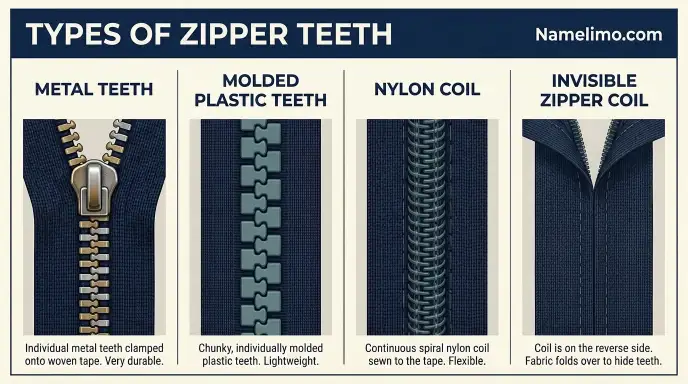
Zipper teeth come in different materials and designs. The tooth construction affects the zipper’s appearance, flexibility, strength, and typical applications.
Metal Teeth
Metal zipper teeth are commonly made from materials such as brass, aluminum, or nickel finished metal.
They are frequently used on jeans, jackets, boots, and heavy duty bags.
Molded Plastic Teeth
Molded plastic teeth are individual elements formed from plastic and attached to the zipper tape. They are common on outdoor clothing, sportswear, luggage, and jackets.
Nylon Coil
Nylon coil zippers use a continuous spiral of synthetic material rather than separate metal or molded teeth. They are lightweight and flexible, making them useful for dresses, pockets, bags, and many other products.
Invisible Zipper Coil
An invisible zipper uses a coil designed to sit behind the zipper tape when closed. This helps conceal the zipper in garments such as dresses and skirts.
Parts of a Separating Zipper
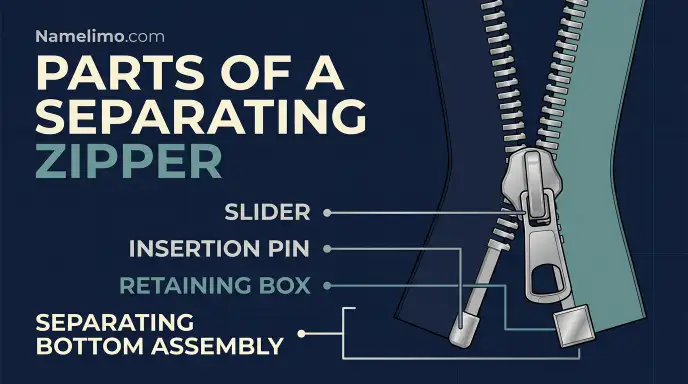
A separating zipper can open completely into two separate sides. It is commonly used on jackets, hoodies, and some outdoor garments.
Insertion Pin
The insertion pin is attached to one side of the zipper at the bottom. It is inserted into the retaining box to prepare the zipper for closing.
Retaining Box
The retaining box is attached to the opposite side. It receives the insertion pin and helps keep the bottom aligned.
Slider
After the pin is inserted into the box, the slider travels upward to engage the teeth and close the zipper.
Separating Bottom Assembly
The insertion pin and retaining box work together as the bottom connection system. If either part is damaged, the zipper may be difficult or impossible to close correctly.
Parts of a Closed End Zipper
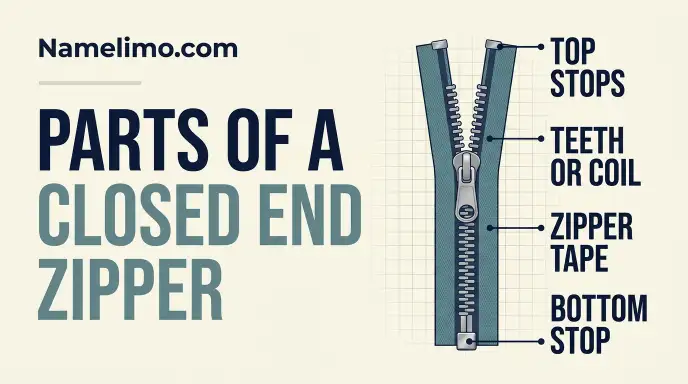
A closed end zipper remains connected at its bottom when opened. It is commonly found on trousers, skirts, pockets, cushions, and handbags.
Top Stops
These keep the slider from coming off the upper ends of the zipper.
Bottom Stop
A bottom stop limits the slider’s movement at the lower end. Some closed end zippers use a bottom stop, while others use a different construction suited to the product.
Teeth or Coil
The teeth or coil form the fastening chain that opens and closes as the slider moves.
Zipper Tape
The tape is sewn into the product and supports the zipper chain.
Unlike a separating zipper, a conventional closed end zipper does not need an insertion pin and retaining box.
Other Zipper Components and Accessories
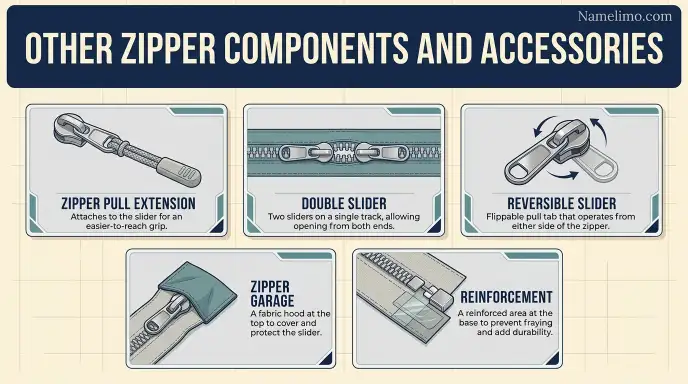
In addition to the main parts, some zippers include extra components designed for specific applications.
Zipper Pull Extension
A pull extension is a cord, loop, or additional grip attached to the pull tab. It makes the zipper easier to operate when wearing gloves or handling outdoor equipment.
Double Slider
A double slider zipper has two sliders on the same zipper chain. Depending on the design, they can move toward or away from each other.
These are common on luggage, long coats, sleeping bags, and some bags.
Reversible Slider
A reversible slider is designed to be operated from either side of the zipper. It can be useful on reversible garments and certain bags.
Zipper Garage
A zipper garage is a fabric or molded cover that helps shield the slider or pull tab when the zipper is fully closed. It is found in some outdoor garments and technical products.
Reinforcement
Some zipper designs use additional fabric or reinforced areas to improve strength where the zipper attaches to the product.
Common Zipper Problems and the Parts Involved
Understanding zipper parts can help you identify the likely source of a problem.
| Problem | Possible component involved |
| Zipper separates after closing | Worn or damaged slider, damaged teeth |
| Slider falls off the end | Missing or damaged stop |
| Zipper is difficult to move | Slider, teeth, coil, or trapped fabric |
| Jacket zipper will not connect at the bottom | Insertion pin or retaining box |
| Teeth are missing | Zipper chain |
| Fabric tears beside the zipper | Zipper tape or surrounding fabric |
| Pull tab breaks | Pull tab or its attachment point |
These are possible causes rather than definitive diagnoses. The correct repair depends on the zipper’s design and the extent of the damage.
Frequently Asked Questions About Zipper Parts Names
1. What are the main parts of a zipper?
The main parts are the teeth or coil, slider, pull tab, zipper tape, top stops, and bottom stop or bottom assembly. Separating zippers also commonly have an insertion pin and retaining box.
2. What is the moving part of a zipper called?
The moving part is called the slider. It travels along the zipper chain and joins or separates the teeth.
3. What is the handle of a zipper called?
The small piece you hold is called the pull tab or zipper pull. It attaches to the slider and provides a grip.
4. What are zipper teeth made of?
Zipper teeth may be made from metal or molded plastic. Other zippers use a continuous nylon or synthetic coil.
5. What is the bottom part of a jacket zipper called?
A separating jacket zipper commonly has an insertion pin and a retaining box at the bottom. Together, these components connect the two sides before the zipper closes.
6. What is zipper tape?
Zipper tape is the fabric strip along each side of the zipper chain. It is used to attach the zipper to clothing, bags, and other products.
7. What is the difference between a slider and a pull tab?
The slider is the mechanism that guides the teeth together or apart. The pull tab is the grip attached to the slider that you move by hand.
8. What are the small metal pieces at the end of a zipper called?
They are usually called stops. Top stops prevent the slider from leaving the upper end, while a bottom stop or another bottom assembly controls movement at the lower end.
9. Can you replace individual zipper parts?
Sometimes. A pull tab may be replaceable, and a compatible slider can often be replaced by a repair professional. Damaged teeth, tape, or bottom assemblies may require more extensive repair or replacement of the entire zipper.
10. How do I identify the correct replacement slider?
Check the zipper’s type, chain size, tooth construction, and slider design. The size number alone may not be enough because sliders are not universally interchangeable.
Conclusion
A zipper is made up of several components that work together to provide a reliable fastening system.
The teeth or coil create the chain, the slider opens and closes it, the pull tab provides a grip, and the tape attaches the zipper to the product. Stops and bottom assemblies keep the mechanism aligned and prevent unwanted movement.
Learning these zipper parts names makes it easier to understand how zippers work, troubleshoot common problems, and select suitable replacement components for clothing, bags, and other products.
Discover More

I’m Grace Anderson, a name researcher and the writer behind NameLimo. I love discovering unique and meaningful names for babies, pets, characters, and businesses, helping readers find the perfect name with confidence.